
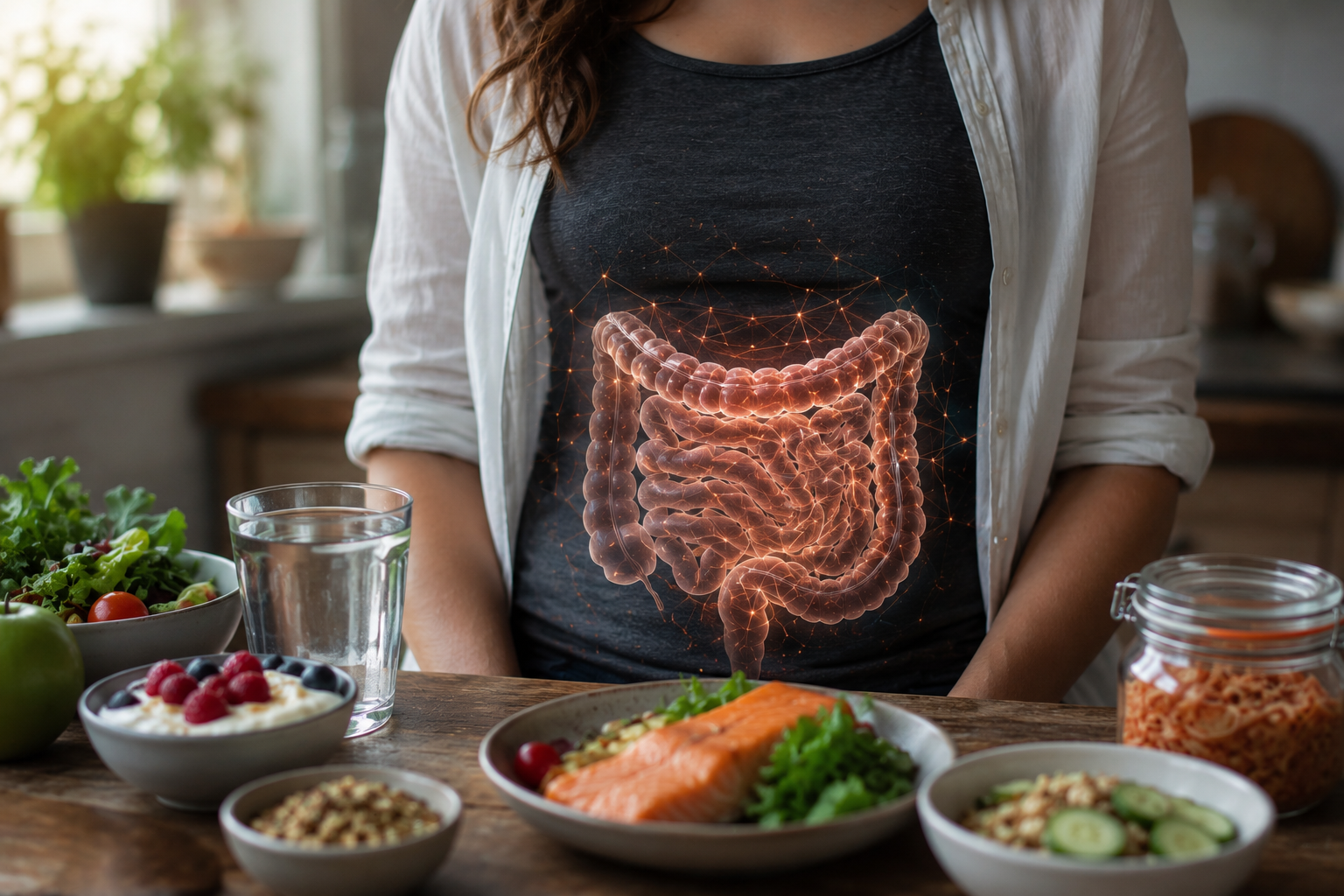
Picture this: a 70-year-old Sardinian shepherd who has never taken an antidepressant in his life, eats fermented cheese and legumes every day, walks six miles every day, and sleeps for eight hours. Scientists studying longevity hotspots are finding that people living these kinds of lifestyles have remarkably healthy guts and remarkably calm minds. Coincidence? The research is saying no.
Your gut is not just a digestive tube. The enteric nervous system (the neural network within your gut wall) contains over 500 million neurons, making it the most complex neural network outside of your brain, one which can act somewhat independently from your central nervous system. That autonomy is why scientific credibility was attributed to the second brain label, not just a metaphorical appeal.
The gut microbiome is the vast community of bacteria, fungi, archaea, and viruses living in your gastrointestinal tract, approximately 38 trillion microbial cells, roughly equal to the number of human cells in your body. Now scientists treat it as its own organ, one with its own metabolic and immune activity, synthesizing vitamins, regulating immune responses, and producing the neurochemicals that control mood, anxiety, and cognitive focus.
Understanding how the gut microbiome affects mental health starts here: by understanding that this ecosystem doesn’t just passively exist. It communicates. And you’re listening.
In the late 1990s, Dr.Michael Gershon was dismissed by many of his peers who were skeptical when he suggested that there existed an independent nervous system within the gut which could influence mood and behavior. His book on this subject, “The Second Brain”, has become more like a prophecy than provocative ideas.
The gut microbiome is a collective term used to describe all of the bacteria (and some fungi, archaea, and viruses) that live within our GI tract. Approximately 38 trillion microbial cells are living in our gut, or about one-third to one-half of the total number of cells in our body. In recent years, scientists have begun to study the gut microbiome as an organ unto itself, having its own metabolic processes, immune responses, and producing its own neurochemicals, which can affect mood, anxiety levels, and focus. (Pubmed)
The enteric nervous system is located throughout the walls of the gut, and contains over 500 million neurons, making it the largest and most complex neural network other than the brain, able to operate independently of the Central Nervous System(CNS). This is what provides the anatomical basis for the “second brain” theory – it is no longer thought of as metaphorically, but as measurable anatomy.(Cleveland Clinic)
Recent studies suggest that learning about the relationship between the gut microbiome and mental health will likely become one of the biggest advances in neuroscience in recent history. The gut microbiota does much more than simply break down food.
Beginning with the three major pathways for communication within the Gut-Brain Axis; Neural (Through the Vagus Nerve), Endocrine (Hormones), and Immune (Inflammation); each of these routes has unique characteristics and impacts on the body. The Vagus Nerve is the primary pathway of the Parasympathetic Nervous System and consists of 80% Afferent Fibers (Gut to Brain) and 20% Efferent Fibers (Brain to Gut). (Springer)
Because of this ratio, it is important to understand. The 80% afferent fiber traffic represents 80% of the “lanes” in a very busy highway. Similarly, there is only 20% efferent fiber traffic (representing only 20% of the “lanes”). The Gut sends much more information up to the Brain than the Brain sends information back to the Gut. Therefore, the way we view Mental Health is greatly influenced by this relationship. The Gut does not receive orders; instead, the Gut provides most of them.
A great deal of research indicates that the gut microbiome plays a significant role in influencing both brain function and behavior through several mechanisms, including microbial metabolites, such as short-chain fatty acid production. These short-chain fatty acids can cross the Blood-Brain Barrier and influence both neurotransmission and neuronal activity. In many ways, the Gut-Brain Axis functions more as an additional nervous system rather than just another telephone line. Like all systems, when they fail, they do so often silently and gradually over time – contributing to symptoms of anxiety, brain fog, and fragmented attention.
Most people believe that the majority of the body’s serotonin (the neurotransmitter responsible for mood stabilization and controlling emotions) is created within the brain. This is incorrect. Almost all of the body’s serotonin (approximately 90-95%) is produced by cells in the lining of your digestive tract. Once produced, this serotonin functions as one of the major regulators of mood and emotions. The disruption of normal production of serotonin through dysbiosis of gut bacteria will be transmitted to other parts of the body and ultimately manifest as anxiety, depressed mood, and decreased ability to focus. (ASM Journals)
Serotonin is not the only player here; research has shown that the gut microbiota produces or stimulates the production of dopamine and GABA (the brain’s main inhibitory neurotransmitter), which helps to calm down excessive neural activity and reduce an individual’s level of anxiety. There are not two separate systems that operate independently – the gut microbiome and neurotransmitter production make up one single system, where the gut is the primary place where these chemicals are produced.(Gut Microbiota for Health)
A key aspect of this is often overlooked. Serotonin produced in the gut cannot pass through the blood-brain barrier. However, when it reaches the sensory nerve endings (afferents) via the vagus nerve, these signals are transmitted to brain areas responsible for controlling emotion, stress response, and the immune system function. The gut does not flood the brain with serotonin. It sends a specific signal, and the brain will respond as appropriate. This is important since it allows us to understand how interventions to improve our gut health may affect our mood without affecting brain chemistry.
Diets rich in prebiotic fibers and fermented foods promote microbial diversity and short-chain fatty acid production, stabilizing stress responses and emotional regulation. What you eat is a direct upstream variable in how your brain manages anxiety
For many years, scientists have argued as to whether or not changes in the gut microbiota cause anxiety or if they are just a result of having anxiety. That argument has, for the most part, been resolved. Researchers completed a bi-directional two-sample Mendelian Randomization study in 2025 to find out if changes in the gut microbiota resulted from depression and/or anxiety. The results showed that changes in the gut microbiota can be considered a causative factor in both depression and anxiety. Correlation became causation.
What does this mean? Gut dysbiosis – an imbalance in the gut microbe communities brought on by the use of antibiotics, consumption of ultra-processed foods, chronic stress, or disrupted sleep patterns – triggers a long-lasting, destructive process. Gut dysbiosis causes increased intestinal permeability so that bacterial components, such as LPS (Lipopolysaccharide), can pass into the bloodstream, triggering ongoing low-grade inflammation. Once the inflammation becomes systemic, it passes through the blood-brain barrier, causing neuroinflammation and continuing to exacerbate the anxiety symptomology. There is no “leaky gut, leaky brain,” it is a proven measurable physiological process.
In this same process lies the HPA (Hypothalamic-Pituitary-Adrenal) axis – the body’s central nervous system regulation of stress. When there is chronic stress, it causes HPA Axis dysfunction and elevated cortisol levels. Elevated cortisol levels over time will damage neurons, especially in areas of the brain responsible for mood regulation and cognition, including the hippocampus and prefrontal cortex.(Kentri)
There is one important point to note about this: this is a feedback loop and not a linear sequence. Stress creates high levels of cortisol. High levels of cortisol increase gut permeability. Increased gut permeability increases neuro-inflammation. Neuro-inflammation increases anxiety. Anxiety increases cortisol. Microbiome dysbiosis and brain fog do not end here; they are symptoms of a continuous cycle that feeds back upon itself.
Brain fog isn’t vague – it has biological roots. The gut microbiome is one of them.
When you eat fiber, your body breaks it down into three (and possibly four) types of short-chain fatty acids, butyrate, propionate, and acetate, which cross the blood-Brain barrier and affect the functioning of the Brain’s synapses (how we think), generation of new neurons (the Brain’s ability to adapt and grow), and overall energy metabolism within the Brain. These chemicals don’t send subtle messages to the Brain; they’re integral to how our neurons function and interact with each other.
Of these, butyrate should be given special attention.
Butyric acid is an important metabolic product of the gut microbiome. In addition to promoting growth and development of new neurons (neurogenesis) and strengthening connections between them (synaptic plasticity), it also promotes the release of BDNF (Brain-derived neurotrophic factor). Bdnf is the protein that supports both the birth and maintenance of new neurons in the hippocampus, which is primarily involved in memory and learning. Reduced levels of BDNF have been found to correlate with impaired cognitive abilities, as well as symptoms of depression and inability to concentrate. (Frontiers)
The trade-off is significant. Use of antibiotics depletes the gut microbiota, which can impair hippocampal neurogenesis & memory. Cognitive deficits are associated with reduced expression of cognition-relevant signaling molecules such as BDNF, serotonin transporter, etc. Also, because antibiotics reduce diversity in the gut microbiome, their impact on the microbiome can have real cognitive consequences that may persist for months.
A Scientific Reports study conducted in 2025 confirmed that distinct profiles of gut microbiota found in healthy individuals were directly correlated to differences in cortical activity measured via EEGs. Thus, a person’s gut microbiome & their production of short-chain fatty acids and brain health are not separate conversations.
The supplement industry has grown much faster than the science behind it, and this gap matters. An Oxford University systematic review and meta-analysis of randomized controlled trials (RCTs) completed in 2025 found that both probiotics and prebiotics were shown to have measurable effects on decreasing symptoms of depression and anxiety in clinically diagnosed populations – specifically through modulation of the gut-brain axis. Good. However, it’s also equally important to state the honest caveat; effect sizes remain modest, optimal dosage remains undefined, and most trials were short-term. (biorxiv)
As for the fermented foods vs supplements debate. The answer is clearer. Unlike isolated probiotic supplements, fermented foods contain complex microbial ecosystems delivering diverse live microorganisms and bioactive metabolites interacting uniquely with resident gut microbiota. Fermented foods like Kimchi, kefir, yogurt, and miso deliver an ecosystem rather than simply delivering a single bacterial count on a supplement label.
Diet architecture provides a broader foundation. Consistently associated with greater microbial diversity and increased abundance of SCFA-producing bacteria is adherence to the Mediterranean Diet, characterized by high fiber, plant diversity, olive oil, and fermented foods. Small, daily exposures to fermented and fiber-rich foods appear to yield more sustainable microbiome benefits than occasional use of supplements.
Knowledge without action is just interesting. Below is a summary of what the current literature supports (and does not) in terms of interventions that support your gut microbiome, and therefore support your mental health.
Food first: Diet is a major source of information for the gut microbiome. In fact, a minimum level of dietary diversity (30+ plant-based foods/week) was shown in large-scale microbiome studies to be associated with increased levels of microbial diversity.
Add 1-2 servings/day of fermented foods. Yogurt, Kefir, Kimchee & Miso are examples of functional sources of microbes that add to your existing gut flora.
Specifically select strain-specific probiotics. Many probiotics are simply combinations of microorganisms from the “shelf,” which may or may not address a specific issue. Only two strains have been extensively studied for their effects on anxiety/depression: Lactobacillus helveticus R0052 and Bifidobacterium longum R0175. Research has demonstrated that these two strains reduce urinary cortisol levels and symptoms of anxiety and depression in humans.
Exercise regularly. Exercise has been shown by researchers using both animals and humans to alter the microbial community and increase its diversity independent of diet. It appears that at least 30 minutes of moderate aerobic exercise performed 5 times/week will induce significant changes in your gut microbiome.
Sleep well. The gut microbiome influences sleep via neurotransmitters such as serotonin, GABA, and SCFAs. Poor sleep directly impairs the production of the neurochemicals produced by the microbiome that regulate sleep. Therefore, the relationship between sleep and the microbiome is bidirectional. Protecting sleep is a critical way to protect the function of the gut microbiome.
Do not take unnecessary Antibiotics, and as much as possible, stay away from heavily processed food. Both are established causes of dysbiosis. Dysbiosis caused by antibiotics may last for many months.
Michael Gershon’s hypothesis was dismissed early on, but today it has become one of the most productive research frontiers in modern neuroscience. The gut is no longer a footnote in mental health science. It is a central character.
The field of Nutritional Psychiatry is increasingly acknowledging the gut microbiota as a primary intermediary between what we eat and our CNS functioning, and mounting evidence showing that microbial composition is associated with increased levels of anxiety, depression, and impaired cognitive functioning, is an evidence-based scientific discipline in its infancy, developing towards being translated clinically. Both statements are true: there is a substantial body of evidence demonstrating compelling support for the relationship between the gut microbiota and mental health (including anxiety/depression), and the field requires additional rigorously designed, long-term prospective studies involving humans before establishing clinical guidelines based upon the data collected.
Therefore, future investigations will need to address the existing disparity between epidemiologic findings and clinical evidence, i.e., identify mechanistic pathways through which the gut microbiota interacts with the CNS. However, this gap is narrowing much faster than many clinicians realize. Organizations such as Longeny have begun to make this knowledge actionable by combining gut microbiome analysis, personalized dietary recommendations, and clinical coaching to translate emerging research into individualized health outcomes.
Brain health doesn’t start at the top of the head. It starts within the gastrointestinal tract, in terms of microbial diversity, SCFA production, neurotransmitter formation, and continuous flow of signals via the vagus nerve upwards from the gut. Don’t treat your gut microbiome as something you should continually try to optimize. Treat it as the second brain it has always been.
The gut-brain axis is the bidirectional communication network between our gastrointestinal system and our central nervous system. It operates via the vagus nerve, hormones, and the immune system. The gut-brain axis also influences anxiety since 80-90% of the vagus nerve fibers travel from the gut to the brain; therefore, there is continuous transmission of microbial status signals to the brain. If we have unbalanced gut flora, these signals create inflammation of the nerves and interfere with the neurotransmitters controlling emotional stability and stress response.
Yes. And evidence now shows causality (not just association). Research done using Mendelian Randomization demonstrated that an imbalance of gut flora caused anxiety; it wasn’t just a result of being anxious. An imbalance of gut flora causes increased intestinal permeability and allows pro-inflammatory substances to enter the bloodstream. These substances then pass the blood-brain barrier and immediately begin interfering with both mood regulation and cognitive function. Many people report experiencing persistent anxiety, chronic brain fogginess, and reduced focus/attention after consuming food that negatively impacts their gut flora.
Gut-derived serotonin accounts for approximately 90-95% of our total body’s serotonin production, not in the brain. The gut microbiota regulates this process. Since the majority of the gut-derived serotonin doesn’t cross the blood-brain barrier, when gut-derived serotonin enters the circulation, it stimulates sensory input to vagal afferents, which send a signal to the brain to influence mood. Therefore, improving gut health will have a significant effect on overall mood, but won’t increase the amount of serotonin produced by the brain.
In 2025, Oxford University published a systematic review and meta-analysis of randomized controlled trials that showed statistically significant reductions in symptoms of anxiety/depression in clinically diagnosed populations using probiotics/prebiotics due to modulation of the gut-brain axis. Specifically, probiotic strains such as Lactobacillus helveticus r0052/Bifidobacterium longum r0175 were studied and demonstrated measurable anxiety reduction, improved problem-solving ability, reduced urinary cortisol levels, etc. However, these effect sizes remain modest, and there are no consensus optimal dosage recommendations yet.
An imbalance of microbial composition caused by poor diet, antibiotic use, chronic stress, or sleep disruption results in increased intestinal permeability. When compounds from bacteria, such as lipopolysaccharide (LPS) escape into the circulatory bloodstream, they trigger chronic inflammation. Once systemic inflammation crosses the blood-brain barrier, it activates immune cells within the brain (microglia) and causes neuro-inflammation, which directly impairs neurotransmitter production, hippocampal neurogenesis, and regulation of anxiety/cognitive function through the hypothalamo-pituitary adrenal (HPA) axis.
Nutritional Psychiatry is an area of study (emerging as a clinical discipline) that researches the connection between our diet and the gut microbe population we have, and also the impact this has on our emotional/mental well-being. This research shows that the food choices we make influence the production of chemicals in the gut by the microbes that affect our moods, anxieties, and ability to focus. Studies are showing certain diets, such as the Mediterranean Diet, can produce positive effects for individuals experiencing symptoms of anxiety and/or depression. These studies show these benefits occur because of changes in the individual’s microbiome. Although there are many valid scientific studies supporting Nutritional Psychiatry, little is known regarding the clinical use of Nutritional Psychiatry at this time.
Cognitive performance is influenced by the gut microbiome, which produces short-chain fatty acid (SCFA) compounds (butyrate, propionate, and acetate) when it ferments dietary fiber. Once the SCFAs enter the bloodstream, they cross into the brain where they modify synaptic plasticity, neurogenesis, and brain metabolism. Specifically, butyrate influences BDNF (Brain-Derived Neurotrophic Factor) production – an essential protein for neuron development in the hippocampus area of the brain, areas important to memory, learning, and focus. Research using antibiotics has shown a reduction in neurogenesis and memory in humans due to the loss of the gut microbiome.
Four clinically-tested probiotic strains improve mental health. They include Lactobacillus helveticus R0052 & Bifidobacterium longum R0175 (tested together); Lactobacillus rhamnosus HN001 (reduces anxiety and depression); and Bifidobacterium breve A1 (improves memory). In a 2025 meta-analysis published in Brain and Behavior, thirteen different clinical trials were analyzed. All thirteen found positive cognitive improvement after probiotics were taken. However, this is highly dependent on identifying specific probiotic strains since broad labels do not provide enough scientific evidence.
Eighty percent of the fibers of the vagus nerve run afferently (gut to brain) while twenty percent run efferently (brain to gut). Thus, the majority of signals sent through the vagus nerve travel from the gut to the brain. Signals from gut bacteria send signals via neurotransmitter and metabolite activation of afferent vagal receptors located in the walls of the gut. Enterochromaffin cells synthesize serotonin that activates these receptors in response to signals received from the gut microbe population. These signals then go to the central autonomic network of the brain. Therefore, there exists a mechanism by which gut microbial composition affects mood, stress reactivity, and cognitive acuity without affecting the brain itself.
Improving gut health results in reducing anxiety symptoms. As such, “reversing” is an overstatement regarding what current research indicates. Eating habits that promote fermented food consumption, prebiotic fiber intake, and Mediterranean-style diet consumption result in significant reductions in anxiety symptomology within six to twelve weeks. Certain strains of probiotics produce measurable decreases in urinary cortisol levels and anxiety reports among individuals suffering from anxiety disorders, as demonstrated by randomized controlled trial data. Aerobic exercise (known to increase the diversity of the gut microbes) and optimized sleep hygiene also support and enhance the effectiveness of targeted gut interventions for anxiety disorder management. While targeting the gut may be effective in treating anxiety, it should only be used as a complementary treatment option rather than replacing traditional methods for managing anxiety disorders.