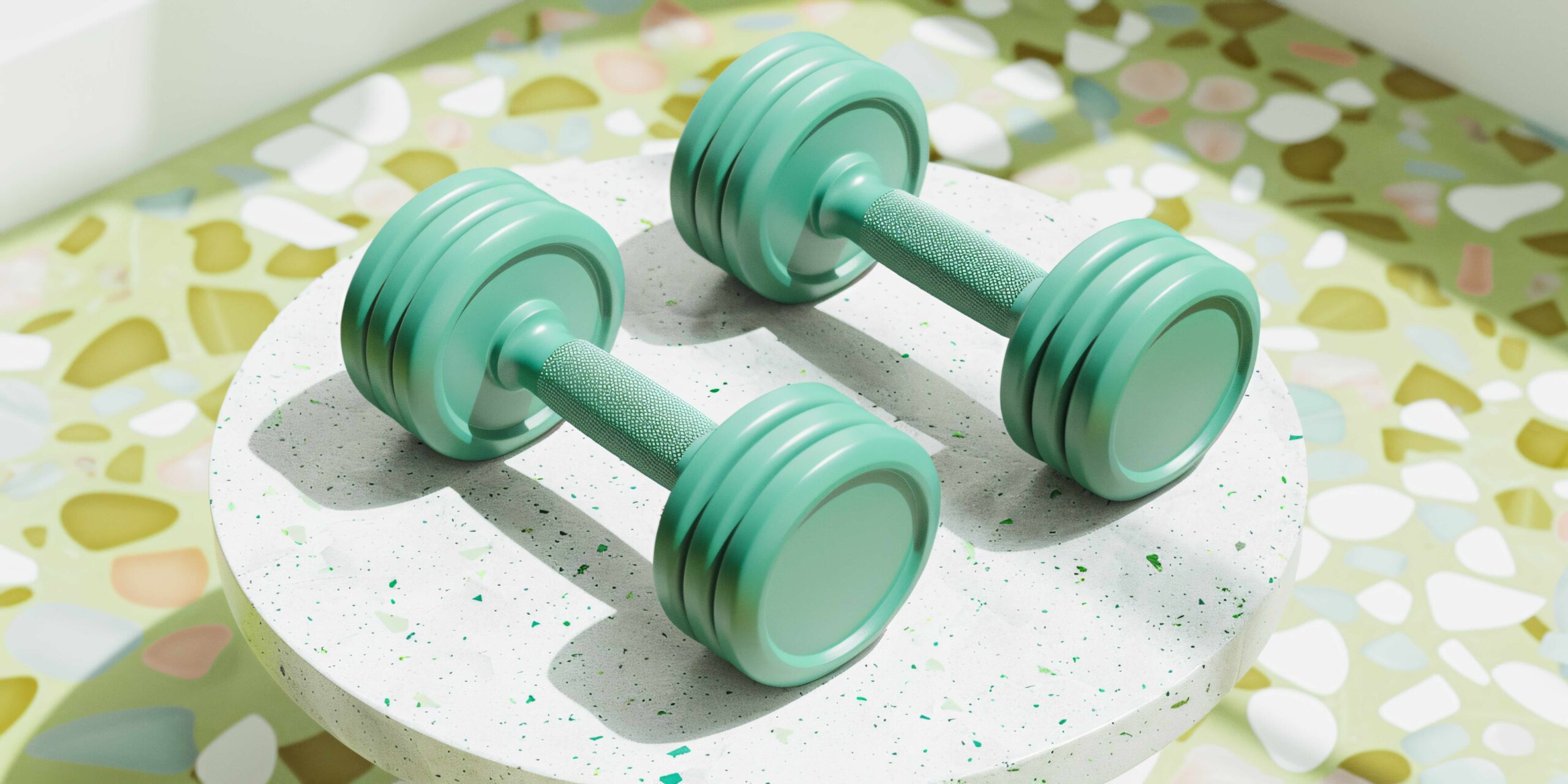
I’m embarrassed to say I own a pair of pastel green dumbbells. In fact, I would have bought a matching set of baby pink ones as well for my beautiful Instagram shot of a color co-ordinated, interior-designed workout space. Fortunately, I refrained.
I was lucky enough to be educated in three of the foremost “all girls“ educational institutions in India – La Martinique Kolkata, Lady Shri Ram New Delhi, and my Masters in Sophia Polytechnic Mumbai. All three of them drummed into me the concept of being an individual, of being unique, of embracing my natural womanhood and power, something I carried forward in pretty much every aspect in life – other than my body image. However empowered you are as a woman, when it comes to the perfect body, the image in your mind will always be of a tall slim perfectly proportioned lady with the “right” amount of curves and muscle. A perfect ratio of not too much muscle, not too emaciated but “toned “and thin.
These ideas are further compounded by social media and the showbiz industry perpetuating the idea that skinny is beautiful, strong is masculine. The allure of a frail and ethereal beauty has in fact has been used time and again by artists and film-makers through the decades until we all consider it the norm. In fact recently a very famous actress went on a drastic weight loss diet – an anti-inflammatory diet to loose weight which did not need her to exercise at all. Everyone was talking about her new slim and sexy avatar. Eating an anti-inflammatory diet is phenomenal and is an ideal goal in every individual’s nutrition journey. Kudos to the actress for taking a big step towards her health but what she may not know is that after a particular age when you loose a lot of weight without changing body composition you do not loose fat – you loose muscle. When you look at the way Ozempic brings changes in people with the drastic muscle loss you get the picture.
Research has shown that if we just calorie restrict without changing our body composition you will loose about 25 – 50 % of your weight in skeletal muscle. It means that now you are metabolically unhealthy and your metabolic healty begins to decline .You’ve shrunk the one organ in your body that helps metabolize sugar and burns more calories even at rest. Without this muscle you have lowered your metabolic rate and when you start eating again you will gain weight or double the fat percentage.
As someone who’s turned 50, I can honestly say I am my fittest today more than I was 5 years ago when I hit peri-menopause and nothing seemed to be going right. This is also the phase where many women begin to explore hormone testing to better understand the changes happening in their bodies. What changed in the last couple of years and that brought a complete 360° shift in my thought process – its Age. You tend to be more open to suggestions when you reach so many dead ends. My extremely fit husband? It took 25 years of him pushing me into to resistance train. My brother-in-law? The strength and corrective fitness guru who I admire tremendously but previously ignored. Honestly, it was probably a combination though the ‘empowered woman” in me will however say it was me finally taking onus of my own health and decided to be informed and dive into nutrition, exercise, and study.
It’s ironic we forget that historically women were always lifters. We carried babies in our womb, carried them on our hips till they could walk. Indian women would walk with pots of water on their heads for miles, help carry bales of hay, and do all the heavy lifting in the kitchen. Try lifting a bucket of water from a well without a pulley. It’s a huge amount of forearm and grip strength. Yet the same woman who probably carries her house and more in her 15 kg purse 😀 lifts not more than 2 kg at the gym.
You tell an average Indian woman my age to do yoga, pilates, run a marathon, do cardio on the treadmill for hours and everyone will be game for something or the other. In fact many are doing a minimum of two of these things if not all. But you tell them to lift weights for strength and muscle and they will have multiple excuses. The most common one I hear is “I want to be toned and not have muscle”.
As someone actively trying to build muscle over the last year and a half, I laugh hysterically when someone gives this excuse. It’s HARD to build muscle. Genetically speaking I may say it’s even harder for South Asian women as there’s a higher genetic tendency for visceral fat especially, around the stomach. Combine this with the hormonal fat in your lower belly when you hit perimenopause it’s even harder. However, the biggest realisation that came to me was how LESS I was eating. Studies show nearly half of active women aren’t eating enough for their body to perform basic functions like regulating metabolism and maintaining homeostasis forget building muscle.
Dr Gabrielle Lyon famously said “ We are not fat, we are under-muscled. She says in her book “Forever Strong“ that muscle is far more than strength or aesthetics. As your body’s largest endocrine organ, it fundamentally shapes your health trajectory, your metabolic health your immune health, and ultimately how you age.
Do not get me wrong, I love my yoga. It’s improved my breath work and helped centre me but as someone who struggled lifting my body weight in yoga thanks to weak shoulders, weak grip strength, and wrists my specific targeted weight training has changed my headstand strength as well.
Remember the goal need not be to participate in the next Olympics or at a professional level – though it’s great if you do. The goal is to live the last part of your life independently, to be able to climb stairs, to hold on to a hand-rail, to lift a suitcase or a grocery bag, to do basic everyday functions we take for granted. It’s really, not about the 10th pull-up, it’s just about the first. So let’s lift!