

There are no gut resets that work in seven days.
Gut reset diet: does it work?
Peer-reviewed studies have shown that significant changes in the gut microbiome (that would lower inflammation and improve metabolic indicators) take approximately eight to twelve weeks of continuous diet change based on high levels of diversity in plants and fermented foods; NOT through rapid cleanses. If you want to find out exactly what your gut needs, there is no better method than using a gut microbiome test.
Priya went to a detoxification retreat for a week and paid over a hundred thousand rupees, hoping that when she returned home she would be lighter, calmer and “reset.” When Priya arrived home, her gut was working worse than when she left, with new bloating, bowel movement problems that were once predictable and now completely unpredictable. And an extreme level of tiredness that nothing could cure – even when Priya slept.
Nothing Priya did during the week was reckless. Priya strictly followed the retreat’s protocol – a very rigid schedule of very small quantities of food, juices, teas, and supplements all designed as a “cleanse” to help flush Priya’s body and allow her gut to grow back. What Priya found instead is what the literature on fast-acting methods for changing the gut microbiome has consistently demonstrated since the last few decades – a gut does not regrow on demand. Abruptly interrupted, it does not reset. It simply becomes more severely disrupted.
The term “Reset,” used throughout the Wellness industry, does quite a bit of heavy lifting; therefore, we should be looking to see what exactly it is offering. Reset utilizes a Factory Restart analogy (turn a switch, delete the memory cache, start fresh), which is a logical approach for resetting a Router. This isn’t how your Gut functions.
Your gut Microbiome has more in common with an Ecosystem/Rain Forest (Trillions of Bacteria, Fungi, Viruses) than with a Machine: the relationships are complex and Interconnected, and will have developed over years through Diet, Environment, etc. Ecosystems do not simply reset after stress. Stress occurs, the ecosystem becomes unstable; and then – if the conditions allow – the ecosystem begins to heal itself. As of this writing, there is virtually no Credible Evidence that Short-Term Detox/Cleansing Protocols enhance the function of the Human Microbiome, and some may even pose Real Risk to the individual undertaking them: juice cleanses utilizing Unpasteurized Ingredients can lead to Harmful Bacteria entering a System Already Under Duress.
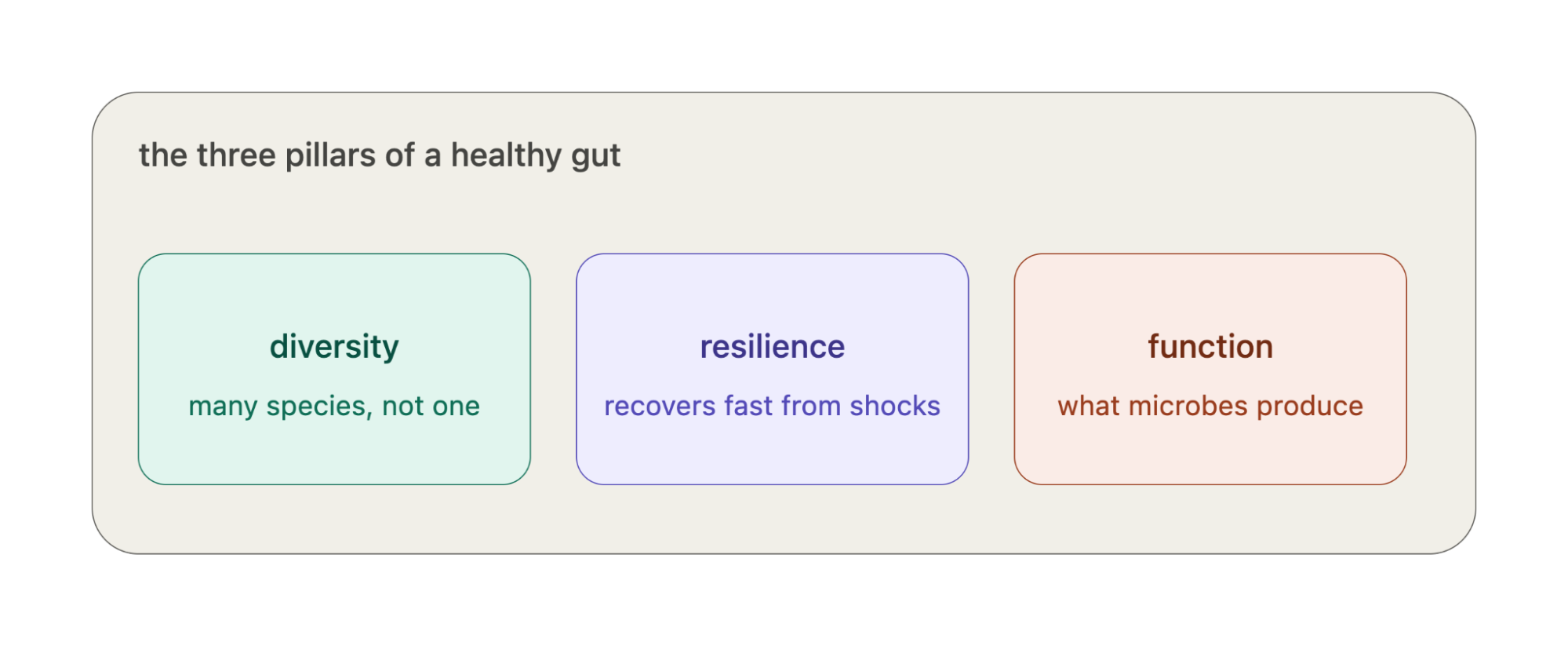
If you were to ask ten articles about “gut health,” nine out of ten would say something very vague about having “good bacteria.” However, the actual scientific definitions of what makes up a “healthy microbiome” rely upon three measurable parameters:
Related Reading:
A clinical study at Stanford University recruited 36 apparently healthy adults. Participants were randomly assigned to either a diet high in fermentable foods (yogurt, kefir, kimchi, fermented veggies) or a diet high in fiber. The only participants who demonstrated an increase in microbial diversity during those ten weeks also saw a decrease in seventeen of nineteen separate inflammatory markers in their blood. There was no measurable impact on microbial diversity from the participants consuming a high-fiber diet during that time frame.
This is a significant paradigm shift regarding natural ways to enhance our gut health.
How to improve gut health naturally? While fiber helps feed your existing microbes, it does appear to be ineffective in introducing new microbes or remodeling the gut microbiota ecosystem. As such, there may be a way to incorporate fermented foods into a working gut health eating plan andcreate a sustainable gut health diet plan that focuses on fermented foods, plant diversity, and long-term microbiome support instead of restrictive cleanses.
A gut microbiome test, taken after the retreat, offered an explanation rather than a guess: it helped identify why she felt so ill after returning home from her vacation. She had a significantly low microbial diversity and nearly lost many of the fiber-fermenting bacterial populations, which are common when someone consumes very limited amounts of dietary fiber. In other words, the lack of diversity in what she consumed for the seven days before taking the test indicated that she would likely experience some degree of gastrointestinal distress. Using data from the gut microbiome test, her clinical team created a systematic plan for her to slowly reintroduce the bacteria that help digest fiber. This included giving her multiple servings of various types of fermented foods each day along with targeted probiotic supplements to restore missing strains of beneficial bacteria.
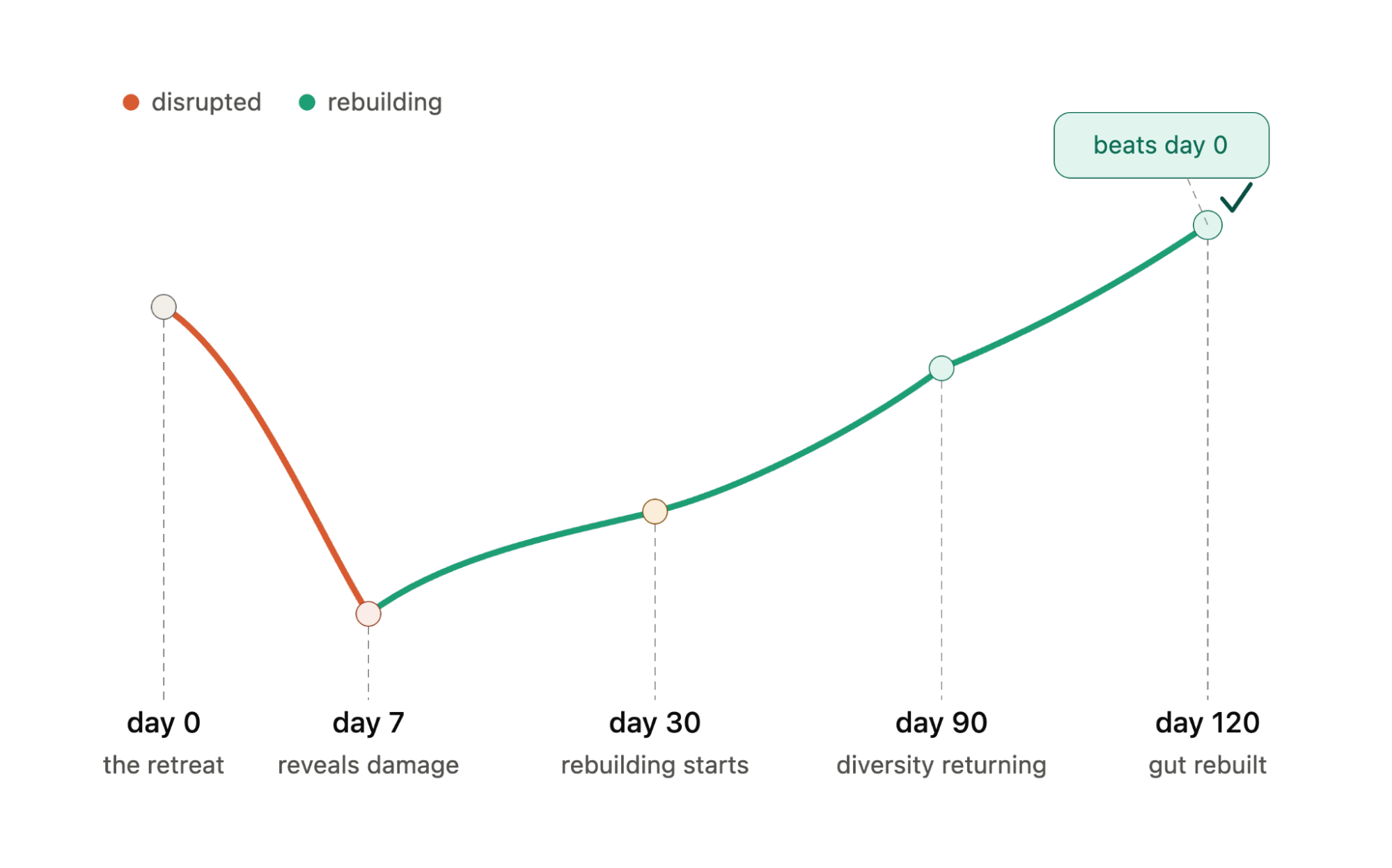
When Priya’s clinical team retested her gut microbiome over a period of approximately 120 days, they observed an improvement in her overall microbial diversity levels and stabilization of her energy levels. Her symptoms associated with bloat disappeared. Although it is difficult to generalize results from one individual to the entire population of individuals with similar gastrointestinal complaints, this example follows the exact patterns predicted by previous scientific studies, including:
A single week of attempting to “reset” the gut through a variety of untested methods resulted in adverse changes.
• Reversal of these adverse changes required almost four months of systematically increasing the amount and type of fiber-rich foods, fermented foods, and carefully selected probiotic supplements that matched the deficiencies identified through the initial gut microbiome test.
Gut microbiome and weight loss science: do they work together? Weight-loss science related to the gut microbiome is real, yet likely one of the biggest overstated areas within this space. Research indicates certain genera of bacteria are more prevalent in individuals with better metabolic health (and those who are normal-weight) independently of body mass, indicating the gut composition itself may represent a metabolic status indicator in addition to body mass. Bacteria have been found to influence the efficiency of nutrient extraction from food, modulate levels of GLP-1, an appetite hormone, and increase or decrease insulin sensitivity.
However, no probiotic or food has demonstrated reliable, significant weight loss individually. As such, I believe it would be fair to say so directly rather than allow science to be twisted to fit a product label. The microbiome is one of many levers; diet quality, sleep, physical activity, and stress also interact with it; none of these factors can substitute a pill.
Where testing provides value is in explaining why two people consuming the same diet observe differing outcomes – typically because they are utilizing their respective microbiomes differently while consuming the same food.
The best probiotics for gut health in India vary based upon both the type of strain(s) used to create the probiotic and the condition you are attempting to treat. Therefore, there is no universal “best” bottle regardless of what is claimed on the labeling. Product labels that specifically name researched strains and list a defined count of Colony Forming Units (CFUs), along with third-party verification/verification process, should receive closer scrutiny. However, for most individuals, probiotics tend to be most effective as a short-term, targeted intervention – i.e., post-antibiotic use, during international travel or when dealing with a confirmed imbalance – versus a long-term, habitual practice. Since there is no way to know exactly what a given individual’s gut requires, choosing a probiotic is essentially making an educated guess; however, if a given imbalance has been identified via testing, then selecting a probiotic to address that imbalance becomes a more defensible decision.
Clinical gut microbiome testing has transitioned from research settings into accessible clinical testing, and the reasons for this are obvious; it eliminates speculation through data. A gut microbiome test can determine which bacterial groups are underrepresented or overrepresented and indicate which biomarkers have been associated with inflammation or metabolic risk – thus allowing for development of a personalized diet plan based upon an individual’s actual biology. Not everyone will benefit from testing; those individuals who remain symptom-free eating a balanced diet have limited reason to utilize testing. Conversely, individuals who have attempted elimination diets, cleanses, or utilized probiotics without experiencing lasting benefits often find that doing a gut microbiome test in India provides the fastest path to identifying a viable solution rather than continuing a cycle of trial and error.
Testing cannot shorten the duration required to rebuild a depleted microbiome. Regardless of the accuracy of the data generated from testing, restoring a depleted microbiome requires the same number of weeks/months described throughout this article as part of the science. Testing simply reduces the amount of time spent on guessing regarding biological processes.
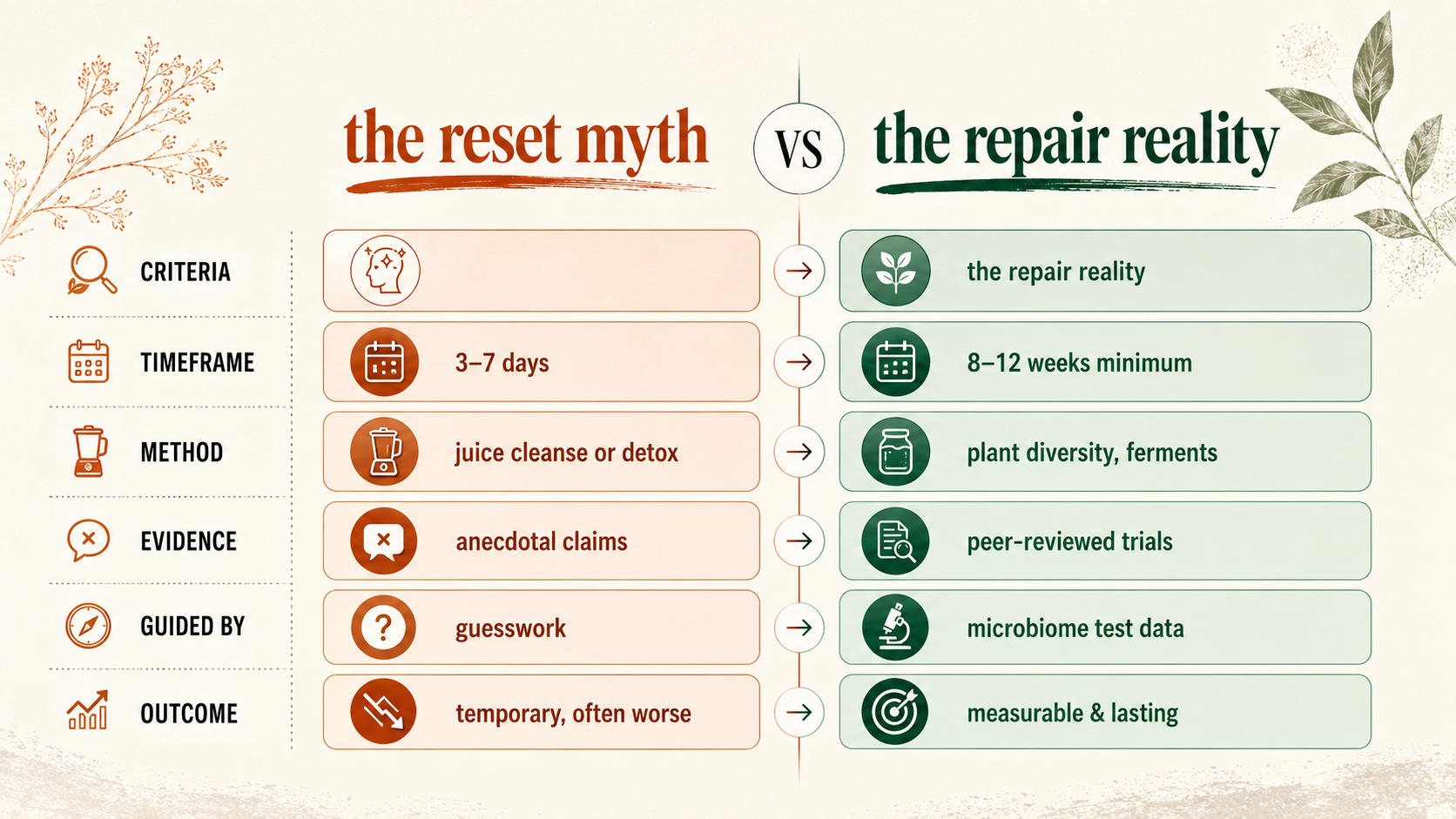
There is no scientific basis for the claim that a gut reset occurring over days is beneficial and can even result in measurable adverse effects. The indicators of good health for your gut include diversity, resilience, and function – NOT any particular bacterium. In terms of natural interventions, evidence-based options include consuming a wide variety of plants and fermentative foods. While there exists a connection between gut microbiome science and both weight loss and metabolic health, neither can serve as an isolated remedy. When non-specific approaches have failed, test-driven nutrition often produces greater results than additional guesses.
Q1. Are short-term cleansing diets truly effective?
There is no documented evidence supporting that short cleanses produce lasting positive results; conversely, some studies suggest that such cleanses may negatively affect gut diversity. Long-term changes made to structured dietary habits over 8-12 weeks demonstrate scientifically measurable results.
Q2. Which foods help improve my gut bacteria the quickest?
Foods that help improve gut microbiome include an array of plant fiber consumption combined with daily intake of fermented foods, which demonstrates the greatest scientific backing in terms of promoting a quick positive response in terms of gut bacteria; No single “superfood” can replicate this outcome.
Q3. Do improvements to my gut health really influence my ability to lose weight?
Indirectly yes. My gut composition affects my energy extraction and insulin sensitivity. Although it functions alongside my diet and lifestyle (as opposed to replacing them).
Q4. Is testing for my gut microbiome worth doing?
If you have already attempted using general methods without achieving desired results, then yes. It allows you to identify specific imbalances in lieu of continued trial-and-error attempts.
As previously stated, the concept known as “gut reset”, as commonly marketed today, represents nothing less than a myth. On the contrary, the underlying repair mechanisms take considerably longer than a weekend at an exclusive retreat. Priya did not require her gut to be flushed; she needed time; credible evidence; and a well-thought-out plan developed based upon her individualized biological characteristics. This represents the definition of “reset” that the current body of scientific literature supports.