
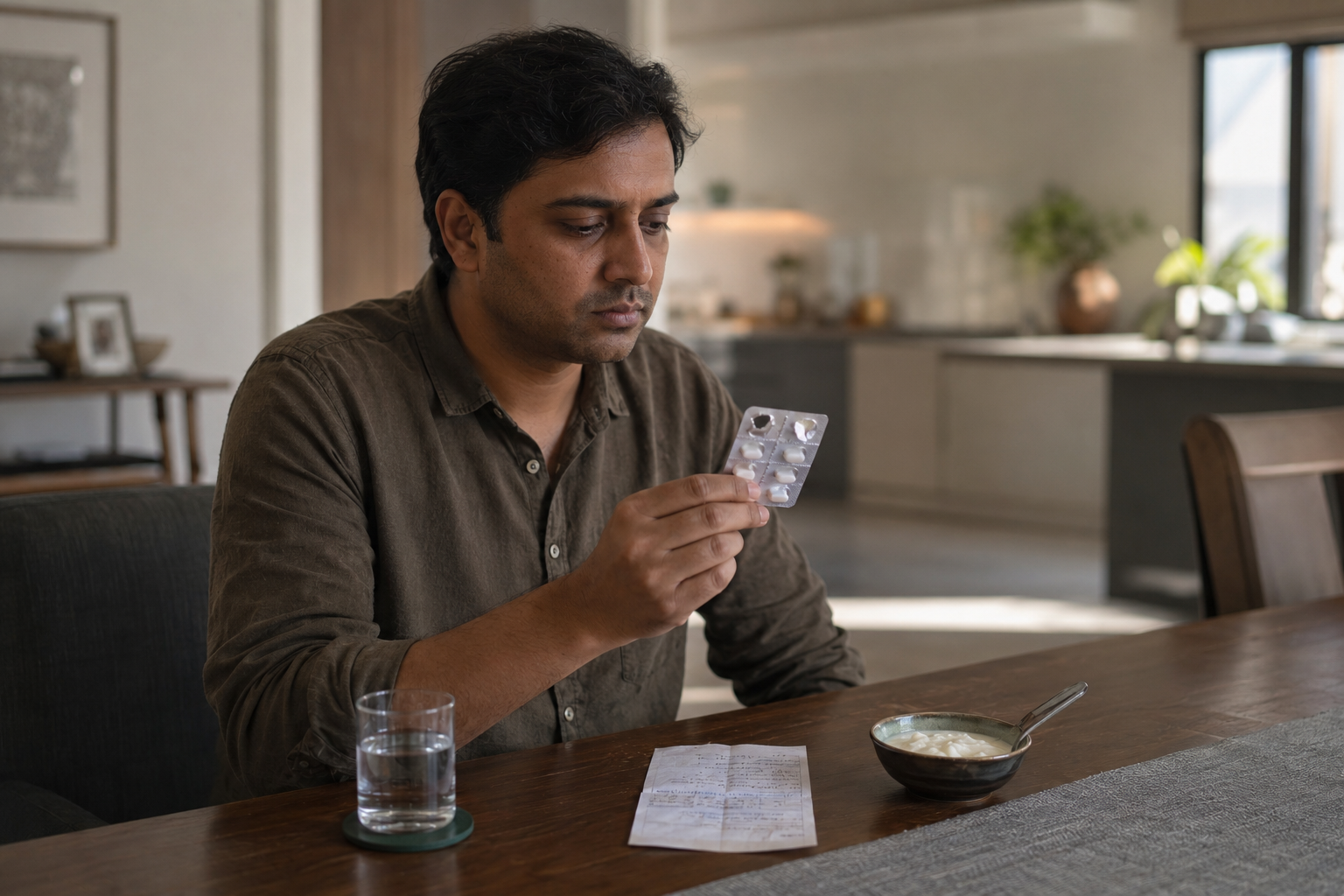
Think about the last time you took antibiotics. A throat infection, perhaps. A stubborn UTI. Maybe a chest infection that wouldn’t quit. Your doctor prescribed a course, you finished it, the infection cleared, and you moved on.
But your gut did not.
Inside your intestines, right now, lives a community of approximately 38 trillion microorganisms. Bacteria, fungi, viruses, archaea, an entire civilisation packed into roughly 1.5 metres of coiled intestine. This is your gut microbiome, and it is not a passive bystander to your health. It plays a central role in gut health, digesting your food, training your immune system, manufacturing neurotransmitters that influence your mood, and maintaining the intestinal lining that keeps toxins out of your bloodstream. It is, in the most literal biological sense, keeping you alive and functioning.
When you swallow an antibiotic, that civilisation comes under assault.
Antibiotics are designed to eliminate bacterial infections. They do this with considerable efficiency. What they are not designed to do is distinguish between the bacteria causing your infection and the 500-plus species of beneficial bacteria that form the foundation of your metabolic health. To an antibiotic molecule, bacteria are bacteria. The collateral damage is not a side effect in the trivial sense. It is a structural disruption to one of the most complex ecosystems in the human body.
A landmark study published in Nature by Palleja et al. tracked the gut microbiomes of healthy young men through a course of broad-spectrum antibiotics. Within four days, the community had lost a significant proportion of its diversity. Blooms of potentially harmful opportunistic bacteria filled the vacuum left by beneficial species. And while most of the microbiome recovered within six weeks, nine of the most common beneficial species remained undetectable in the majority of participants six months after the course ended.
Six months. After a single course.
This is not a story about whether antibiotics are good or bad. They are among the most important medicines in human history, saving millions of lives every year. This is a story about what happens in your gut after you finish a course, why recovery is more complicated than most people are told, and what the science now says you should actually do about it.
India is not only a big user of antibiotics. In fact, it uses the greatest amount of antibiotics globally by far. One study by The Lancet Infectious Diseases looking at antibiotic usage around the world ranked India as #1 for total usage (per capita) even after adjusting for prescribing by country. Since then, we have seen no improvement.
Most of us talk about antibiotic resistance when discussing public health and what can be done. This is good but does not tell you the whole story. Every dose of antibiotics is a “disruption” to your gut microbiome. And if these disruptions happen too frequently or too long, they create harm to your gut microbiome that will never be undone.
Indian gut microbiomes face unique challenges that cause compound effects. Studies comparing the gut microbiota among Indian populations versus Western ones found Indian gut microbiomes had significantly fewer different microorganisms at the baseline than did their Western counterparts due to many things such as rapid dietary changes in cities, a high incidence of GI infections during childhood, using OTC antibiotics w/o prescriptions, and being exposed to antibiotics during infancy. When your gut microbiome starts with fewer different microorganisms, there is little resiliency to absorb additional impacts of an antibiotic course. Its recovery is already at a lower level.
And here is another issue. Gastrointestinal infections are frequent and recurring in the Indian diet. Many people in India get many doses of antibiotics each year for infections caused by viruses, which would heal on their own without treatment. Each dose is applied to a gut microbiome that might still not be recovering from the previous dose. The ecological debt builds quietly.
For a large portion of the Indian population, it produces a gut microbiome that is in a chronically disrupted state. It is not diseased by definition. Symptoms produced are not severe enough to seek medical attention. However, it functions below its ability; with reduced microbial diversity; with reduced barrier function of the gut; and it has a decreased ability to regulate metabolism, immunity, and inflammation.
India’s antibiotic crisis is not simply an antibiotic crisis. It is also a hidden gut health crisis.
You have to know how antibiotics affect your gut to get an understanding of how they affect your gut.
As I stated above, the reason we use antibiotics is because of their ability to target certain aspects of bacterial biology. In order to kill or inhibit the growth of certain bacteria, some types of antibiotics, such as penicillin and cephalosporin, inhibit the production of the bacterial cell wall; others (such as fluoroquinolones) stop the reproduction of the DNA of the bacteria; macrolides prevent proteins from being produced. Each type of antibiotic targets a particular feature, and each one kills or inhibits the growth of any bacteria that possesses this feature. This is elegant, precise pharmacology at the level of the individual molecule.
At the level of your gut, it is anything but precise.
The problem with using antibiotics is the scope. Most antibiotics used in medical practices in India (where broad-spectrum antibiotics are preferred) don’t just target one bacterial species. Instead, they target whole classes of bacteria that possess similar biological characteristics. When you take a fluoroquinolone for a urinary tract infection, you will be killing off the pathogenic bacteria causing your UTI. But, you’ll also be suppressing the many beneficial bacterial species in your gut that contain DNA replication machinery identical to the machinery that the fluoroquinolone is supposed to disrupt. The antibiotic doesn’t have any way of distinguishing them.
Sonnenberg et al., researchers at Stanford University, demonstrated through a study that a single dose of ciprofloxacin, a very common antibiotic in India, decreased the diversity of the gut microbe population by about 30% within three days of beginning antibiotic treatment. Those species harmed were not pathogens. Those species harmed were Lactobacillus, Bifidobacterium, Faecalibacterium prausnitzii, and Roseburia intestinalis. Those are some of the most metabolically active bacteria in your gut. For example, F. Prausnitzii is responsible for the production of much of the butyrate found in your colon, a short-chain fatty acid that supplies energy to your colonic mucosa cells, prevents inflammation, and keeps your intestinal barrier intact.
But when those bacteria responsible for producing butyrate are destroyed, your colonic mucosa cells lose their chief energy supply. The tight junctions between intestinal epithelial cells start to break down, and you develop increased intestinal permeability (also called leaky gut). At that point, bacterial fragments and toxic substances created by metabolism in your colon start to cross over into the bloodstream. This creates a persistent low-grade systemic inflammatory process that continues even though you have stopped taking your antibiotics.
The diarrhea, nausea, and bloated abdomen experienced during and after antibiotic therapy is not merely a coincidence. It is simply a symptomatic expression of the more serious structural damage to your gut caused by the loss of stability to your gut’s microbial architecture. Your body is reporting this loss of stability to your gut through pain.
Most people are unaware of the fact that most of what an antibiotic does to the gut microbiome results in no symptoms at all. The effects may occur slowly over weeks and/or months after you’ve finished taking your antibiotics.
The antibiotic treatment has completed. Your infection has resolved. You feel good. On the surface, this incident has ended.
In your digestive tract, however, things look nothing like recovery.
Scientists document an ecological aftermath instead of recovery in the days immediately following the completion of an antibiotic course. The pre-course microbial community (that was formed over time, influenced by your diet, environment, genetics, and lifestyle) has undergone fundamental reorganization. The reorganization favors pathogenic species.
Here is what research indicates occurs in the days immediately after a course is completed.
Opportunistic blooms occur as the first step. Dominant beneficial bacterial populations are suppressed; therefore, the ecological niches they had occupied are vacated. Species such as Enterococcus, Enterobacteriaceae, and, in more severe cases, Clostridioides difficile that were held in check through competition begin to bloom rapidly to occupy these niches. This is not good news regarding the quantity of these bacteria. Enterobacteriaceae include strains of E. coli that cause gut inflammation and compromise barrier function. Clostridioides difficile, which can grow to dangerous levels following antibiotic use, can be responsible for a range of disease from severe diarrhea to potentially life-threatening colitis.
Dethlefsen and Relman at Stanford published a study in Cell Host and Microbe that demonstrated that within days of completing a ciprofloxacin course, the gut microbiome of healthy adults was essentially identical in terms of composition and functional output to the microbiome profile of critical care patients in intensive care units. That comparison should stay with you. Taking a routine antibiotic course for a common infection by an otherwise healthy individual could temporarily render the gut microbiota vulnerable enough that medicine usually associates with serious illness.
The second thing that happens is a collapse in short-chain fatty acid production. With butyrate-producing species such as Faecalibacterium prausnitzii and Roseburia at lower abundances, the colon produces less butyrate, less propionate, and less acetate than necessary. The previous sentence was written to emphasize that these metabolites are not merely optional add-ons to gut function. Butyrate is the primary energy source for colonocytes, which are the cells that line the colon. If there is insufficient butyrate available to colonocytes, then the intestinal lining begins to thicken and weaken. Propionate influences signaling related to glucose metabolism and satiety to the brain. Acetate affects immunity. The metabolic consequences of losing these metabolites extend far beyond just the gut.
The third thing that happens is a change in the immune tone of the gut. Approximately 70% of immune cells reside in the gut-associated lymphoid tissue. The composition of the microbial community determines the behavior of these immune cells; it adjusts the proportion between inflammatory and anti-inflammatory responses. The loss of calibration when the microbial community is disrupted results in the immune response in the gut becoming shifted towards a pro-inflammatory state even without any active infections. For individuals who possess metabolic risk, including the vast majority of urban Indians whose increased tendency to develop visceral fat accumulation and insulin resistance makes them susceptible to chronic diseases, this shift in the immune tone is not negligible.
There is no test your doctor will run as part of a routine examination. There is no number on a standard blood panel that measures this condition. The gut appears intact. The infection is gone. The prescription has been completed.
But the microbial architecture governing your metabolic health, immune function, and gut barrier integrity is significantly disturbed. How successfully it can recover from here is dependent upon factors few people know exist.
Antibiotics are one of the best tools we have to help us fight off infections. However, once you’ve completed a round of antibiotics, you may hear something along the lines of “give it a few weeks, eat some yogurt, and things will return to normal. It is well-intentioned advice; however, for a large portion of people, it is inaccurate.
Over the past ten years, there has been a great deal of advancement in our understanding of how the microbiome recovers after taking antibiotics. What researchers have discovered is much more serious than the idea that everyone’s gut just needs a little time to bounce back.
One of the most quoted studies (Palleja et. al.) regarding how long it takes for someone to regain their original microbiota after completing a regimen of antibiotics appeared in Nature Microbiology. In this study, researchers followed a group of young, healthy males who each received a four-drug combination of antibiotics. Afterward, they monitored the subjects’ gastrointestinal microbiomes for six months to track their recovery.
While the authors reported that most of the microbial communities recovered to be similar to their state before the completion of their regimen within six weeks, there was a lot more to the data. Nine bacterial species existed in every participant before the completion of their regimen, which remained undetectable in the majority of participants six months later. None of these bacteria were rare or peripheral. They were all primary contributors to a healthy gut microbial ecosystem. These included bacteria that produce butyrate and modulate the immune system, which apparently could no longer naturally recover once their population size fell below a certain threshold.
In addition to the study mentioned above, researchers at the University of Michigan School of Public Health conducted another study (Seekatz et. al) and published their findings in mBio. Their results indicated that antibiotic-induced gut microbiome recovery is generally incomplete. As a result, the remaining microbial community becomes more susceptible to future disruptions. These potential disruptions include additional rounds of antibiotics, diet-related disturbances, and potentially opportunistic pathogens.
So why do some individuals recover quickly while other individuals struggle with recovery? To answer this question, researchers from the Indian Institute of Technology in Chennai collaborated with various international organizations to identify twenty-one bacterial species that function as keystone recovery species post-antibiotic treatment. When there are enough keystone recovery species present in adequate numbers before treatment is initiated, these species help create an environment where the establishment of a diverse microbial community can occur. Additionally, by occupying previously vacant ecological niches, they limit opportunities for opportunistic pathogens to become established. Conversely, if keystone recovery species are either underrepresented or missing before treatment commences, recovery will be slower, less complete, and more likely to cease altogether.
These results provide insight into implications related to the use of antibiotics in India. Individuals who enter an antibiotic course with a gut microbiome that has limited biodiversity, lower levels of key indicator microbes, and previously experienced disruptions caused by other interventions (e.g., previous antibiotic treatments), will have fewer keystone recovery species available to assist with restoration. The initial conditions play an enormous role in determining success. Unfortunately, many Indians begin treatment under less favorable conditions than would be ideal.
There is also the issue of antibiotic choice. Not all antibiotics impact the microbiome similarly. Researchers have demonstrated that clindamycin and fluoroquinolones are among the antibiotics associated with the greatest disruption of the gut microbiome. Jernberg et. al demonstrated that Bacteroides populations impacted by clindamycin were altered and persisted for up to two years following a single course. Two years! On the other hand, amoxicillin typically impacts the gut microbiome such that alterations resolve within four to eight weeks.
Overall, the developing consensus based on current research indicates that recovery following antibiotic treatment is not inevitable biologically. Rather, it is dependent upon a variety of factors including the status of the individual’s gut microbiome prior to antibiotic use, the type of antibiotic(s) used, whether or not previous courses of antibiotics have been administered, nutritional patterns during and following treatment, and other characteristics yet unknown. For a notable percentage of patients, failure to achieve full recovery represents more than simply a short-term inconvenience; rather, it marks the initiation of a new baseline from which future health issues will evolve.
Antibiotics cause disruptions to the microbial ecosystem in the intestines. So, when you finish a prescription, many doctors will tell you to take a probiotic. It’s probably one of the most widely given recommendations about how to improve or restore your gut health. Many pharmacists give the same recommendation. Many wellness professionals do too. With a global market size of $60 billion, the probiotic industry has largely centered on recommending probiotics after antibiotics.
However, the scientific literature says something different. A pair of studies conducted in 2018 at the Weizmann Institute of Science in Israel by researchers led by Dr. Eran Segal and Dr. Eran Elinav changed everything. The first study provided data that caused concern regarding common probiotic products. Researchers tested several common probiotic supplements (the primary ones being Lactobacillus and Bifidobacterium) and could not find them to be reliable colonizers. Most individuals who consumed these supplements saw the bacteria pass through their gastrointestinal tract; the intestinal flora remained relatively unchanged. However, colonization was quite individualized among participants, with each person responding differently (with some showing colonization and others showing no colonization). There also did not appear to be a method for predicting which patients would develop colonization without conducting a test.
The second study produced even more startling information. The researchers studied three methods of recovering from an antibiotic course: A control group that received no treatment; A group receiving the typical multi-species probiotic product used by consumers; and an autologous fecal transplantation group that received a sample of their own pre-antibiotic feces. What the researchers found shocked them. The group receiving probiotics showed the slowest recovery of the three groups. Compared to both the control group and the autologous transplant group, the probiotic group required significantly longer to recover its indigenous bacterial population. The authors hypothesized that this was due to competitive inhibition, where the probiotic organisms colonized the epithelial surface quickly after an antibiotic-induced reduction in competing species, thereby delaying recovery by providing competition for those species attempting to recolonize their original niche.
Does this imply that probiotics are never useful after antibiotics? Not necessarily. While there appears to be substantial clinical evidence supporting certain strains’ effectiveness in preventing antibiotic-associated diarrhea, such as Saccharomyces boulardii and Lactobacillus rhamnosus GG, these are generally considered strain-specific prevention strategies and not general restoration strategies.
The distinction is critical. The idea that taking a two-strain probiotic product after completing a course of antibiotics will restore your gut microbiome is similar to planting two types of grass seed into a recently burned area and saying “that’s enough.” The immediate greenery may grow quickly, but the overall ecosystem has not recovered.
The Weizmann research, as well as other recent research in this area, clearly indicate that post-antibiotic restoration of the gut microbiome is not a simple problem solved by a generic probiotic product. Restoration of the gut microbiome is an ecological issue requiring a much deeper understanding of what was lost and what needs to be put back.
Understanding how to restore ecosystems begins with understanding what happened in your body versus what we assume happens.
Gut recovery from antibiotic-induced dysbiosis is NOT an automatic result of stopping antibiotics. This recovery will require you to make conscious decisions based on evidence.
The most well-supported choice for restoring your microbiota after antibiotics has been dietary fiber. In a recent study by Wastyk et al., in the journal Cell, it was shown that eating a diet rich in fiber helped restore the balance of microbes in the gut (microbial diversity) much faster than if no fiber had been consumed. The fiber provides a source of food for the remaining beneficial microbes, allowing them to grow back into areas of the gut previously occupied by opportunistic pathogens.
There is also additional support for using fermented foods as part of your recovery. Studies have been conducted by Sonnenburg’s research team at Stanford University showing that consuming fermented foods such as yogurt with live cultures, kefir, and other fermented foods regularly resulted in greater microbial diversity and lower levels of inflammation compared to eating a high-fiber diet alone.
Fiber and fermented foods both provide evidence-based ways to promote recovery of the gut, but their methods for doing so appear different. Therefore, it would be expected that consuming both would have additive effects when used together.
Additionally, sleep and stress management strategies are not trivial recommendations in this area. Cortisol reduces the ability of Bifidobacterium and Lactobacillus species to grow. A gut attempting to recover from antibiotics under constant stress is fighting against its own attempt to heal itself.
The issue here is that each of the previous solutions (increasing fiber, adding fermented foods, managing stress, selecting a probiotic) is performed “blindly”.
You do not know which microbes were eliminated. You do not know which bacteria took advantage of the void left by the elimination of the native flora. You do not know if the butyrate-producing members of your flora have recovered sufficiently to produce adequate amounts of butyrate. You do not know if your gut lining’s integrity has been restored. You do not know if the key recoverable species (the ones responsible for determining how fully your microbiota recovers) are abundant enough to allow them to perform their functions. The above are all educated guesses about an invisible ecosystem, and they depend on symptoms that may or may not accurately represent what is occurring at the microscopic level.
This is exactly where gut microbiome testing comes in.
Conducting a full gut microbiome test four to six weeks after completion of an antibiotic course will give you one thing that no other dietary protocol or supplement program can: hard data. This will tell you the current makeup of your microbial community; which beneficial species are present and in what abundance; which potential pathogens have increased in numbers; and compare the number of different types of microbes to those of a normal reference population. This allows you to translate the unseen ecological consequences of your use of antibiotics into information you can apply.
This is not a fringe concern for overly health-conscious individuals. For anybody who has used a broad-spectrum antibiotic; had persistent gastrointestinal symptoms after finishing their antibiotic course; or completed multiple rounds of broad-spectrum antibiotics in less than one year, post-antibiotic gut testing is the difference between developing a plan for recovery based on assumptions versus developing a plan for recovery based upon empirical evidence.
There is no confusion in this reasoning. You would not manage a thyroid disorder without having measured the levels of thyroid hormones. You would not make changes in the medications being administered to someone with diabetes without monitoring their blood sugar. Similarly, managing the recovery of your gut microbiota after using antibiotics without measuring your microbiota is an error in judgment.
The Indian reader can see a real need for post-antibiotic testing of the gut microbiota. This is not a theoretical issue – it is very personal and immediately relevant.
You live in the world with the largest per capita antibiotic consumption on Earth; there is evidence that your gut microbiota is less diverse (at least initially) than that of populations in other developed countries. Your diet is changing dramatically, moving away from the fiber-dense diets rich in fermented foods that supported bacterial diversity across many generations. In India, antibiotics will likely remain part of your healthcare options when treating infections that could otherwise be treated differently. But, currently, you do not know what is going on inside your gut microbiota.
Each time you take an antibiotic course, you leave a footprint in your microbiota. The size of this footprint is a major unanswered question; whether or not your microbiota will regain its pre-disruption diversity and/or functional capability remains unknown. Whether or not your microbiota operates at a baseline level of compromised diversity and/or functionality as a result of these disruptions also remains uncertain. The latter two questions are directly related to your metabolic health, immune function, and long-term risk of developing chronic diseases.
Longeny’s TruGut360 test was created specifically to address these exact questions. TruGut analyzes the composition of your gut microbiota at the species level. Using advanced DNA sequencing technologies, TruGut creates a detailed map of the species found in your gut microbiota and provides you with a highly personalized view of your current status. This allows you to use your individual biological data to make informed decisions around dietary changes, supplements, and lifestyle modifications.
Antibiotics aren’t the problem. Many times there are infections that can be treated with antibiotics (i.e., not optional), and antibiotics are among the top weapons we have to fight disease.
However, finishing a prescription does not equal “the ending” of what has happened to your body during this time period. Your gut is a central control center for your metabolic system, immune response, and inflammation level. The effects of disrupting your gut (and subsequently your metabolic system/immune response/inflammation levels) typically occur slowly and silently, rather than suddenly. As such, when your gut is no longer able to regulate properly, the long-term damage is typically silent and is therefore often difficult to identify until you are experiencing serious symptoms from a compromised metabolic system.
Therefore, treat the end of the antibiotic course not as the end of a health issue, but as the start of a recovery process that requires focus. So eat your fiber; add some fermented foods; and by four to six weeks post-antibiotic course, get tested for your gut health so you can determine if the recovery process was successful. That antibiotic course ended on the day you took your last pill. Everything else that occurred in your gut after that is currently being written.