

Think about the last time you had a bad night’s sleep and woke up in the morning to reach for something high in sugar to help you get through the day, or how last night’s heavy dinner made you feel so bloated at 2 a.m., and you couldn’t fall asleep? It doesn’t feel like just a coincidence. That is because it is not one.
Gut health and sleep are two intertwined stories. They are a single feedback loop. More and more research shows that there is an extensive relationship between gut microbiome and sleep quality, where common biological signals shape both. Poor-quality sleep will negatively affect your gut flora. An imbalanced gut can sabotage your sleep, no matter how disciplined your bedtime routine is.
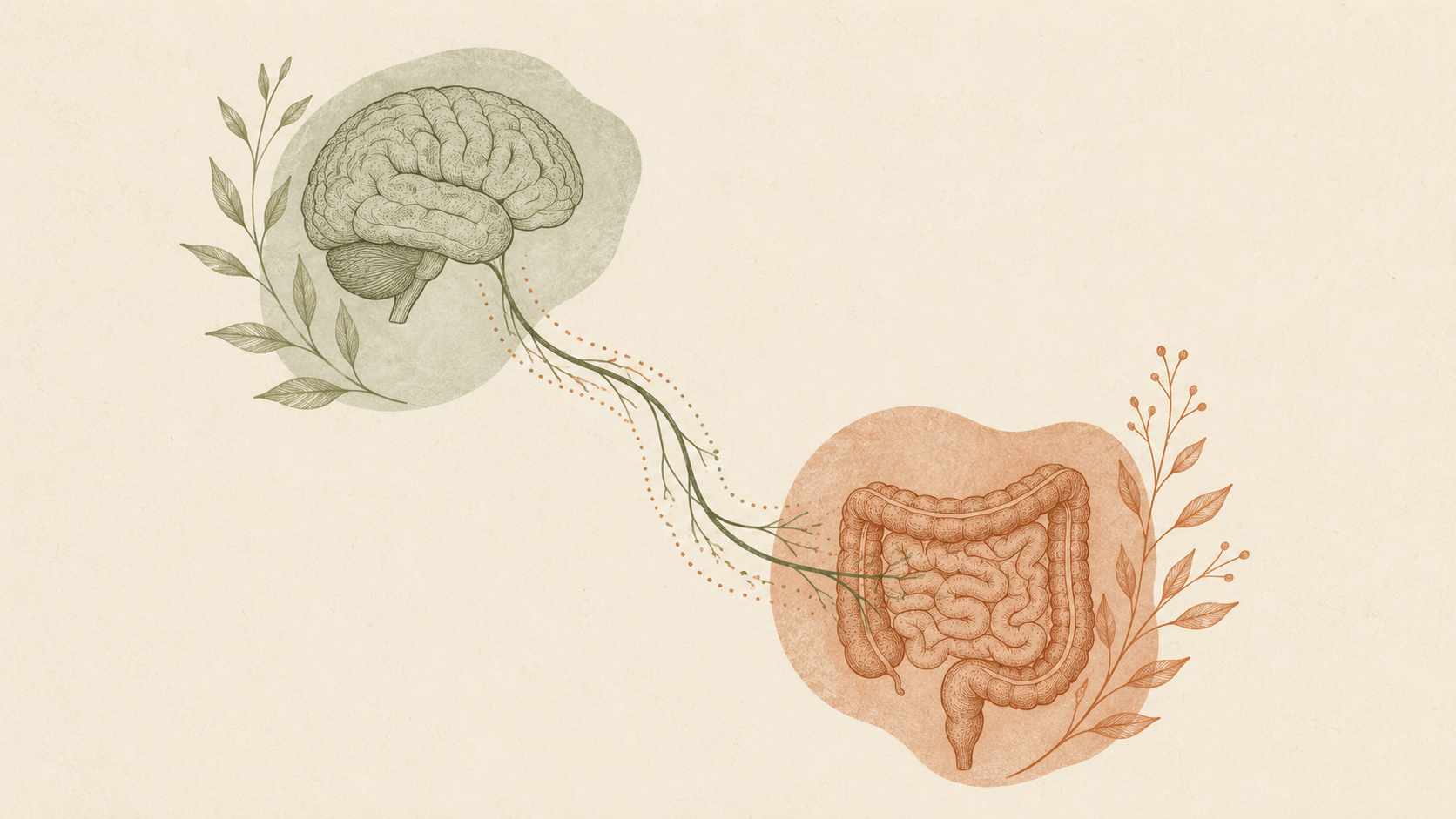
You’ve probably heard your “gut” being referred to as your “second brain”. The reason this term has some merit is that your gut and brain are constantly communicating with each other via the gut-brain axis, which is made up of an array of nerves, hormones, and immune signals.
One of the primary ways that the gut communicates directly with the brain is via the vagus nerve. The vagus nerve extends from the brainstem to the abdomen and allows two-way communication. Therefore, your gut sends messages to your brain and vice versa.
This matters for serotonin gut production and sleep, since nearly all of your body’s serotonin is made in your gut, not your brain. Your digestive tract also produces melatonin, meaning your melatonin-gut microbiome connection runs independently of your brain’s output.” (or more naturally:…highlighting the melatonin-gut microbiome link that operates independently of your brain).
Certain types of bacteria found in the gut help control the pathways involved in the production of serotonin and subsequently melatonin. When your microbiome is healthy and functioning at peak capacity, this signaling process typically runs smoothly. However, when there are problems with your microbiome, such as low diversity or lack of balance, the ability to initiate sleep may be impacted.
There’s also a circadian rhythm to gut bacteria activity, much like your own sleep-wake cycle. Gut bacteria exhibit a natural circadian rhythm. When we experience disruptions to our normal sleep patterns due to factors such as poor diet, late-night meals, or travel across time zones, our gut function and therefore our sleep quality may also be negatively impacted.
Researchers describe this as bidirectional: sleep and gut health continuously shape one another. They found a clear bidirectional relationship: “your gut influences how you sleep, and what happens when you sleep affects your gut,” both through metabolic and immune system mechanisms.
Yes. In short, poor sleep can affect gut bacteria and, over time, cause gut problems that extend well beyond feeling tired. Even short-term sleep disruption can measurably alter the composition of your gut bacteria.
When your sleep is disrupted due to lack of quality, quantity, or fragmentation, your body will respond as though it were under a condition of mild stress, leading to an increase in the production of the hormone cortisol and low-level inflammation. Both conditions alter the environment in which your gut bacteria reside. As a result, research indicates that it may lead to decreased microbial diversity (i.e., fewer types of bacteria).
A decrease in microbial diversity can be seen through the reduction of the number of species of bacteria present in your digestive system. It has been found that there is a change in the ratio of two major bacterial groups (Firmicutes and Bacteroidetes) as well. The imbalance of these two groups has been linked to changes in metabolism and can affect how efficiently your body manages glucose levels and how much fat is stored.
There is also a “barrier” aspect to consider when discussing the effects of sleep deprivation on your gut health. Your body’s ability to regulate what substances pass from your digestive tract into your bloodstream can become weakened during times of sleep deprivation. In other words, sleep loss can disrupt the integrity of the lining of your gut, potentially allowing harmful compounds produced by bacteria to enter your bloodstream.
Read more: Leaky Gut Is Real – And Its Connection to Autoimmune Disease You Need to Know
Short-chain fatty acids and sleep are closely connected: these compounds, produced when gut bacteria ferment dietary fiber, help regulate the inflammation and gut-brain signaling involved in falling and staying asleep. The loss of regulatory control over these processes occurs because of the lack of diversity in the beneficial bacteria in the gut.
Recent research on the insomnia-gut microbiome connection shows that dysbiosis, an imbalance favoring less beneficial bacteria, is associated with insomnia. Research that compared individuals who have difficulty sleeping with individuals who have no problem with their sleep shows differences in specific bacteria and in the total amount of diversity of microbes in those individuals who have difficulty with their sleep. There is a feedback loop here too. If there is a disruption in the gut, then there will be an increase in inflammatory signaling that can reach the brain. It is well established that inflammation interferes with the release of neurotransmitters that promote falling asleep and staying asleep throughout the night. Therefore, unhealthy gut health does not merely correlate with unhealthy sleep but rather may contribute to unhealthy sleep.
WATCH FOR THIS PATTERN
If you have one or more of these clues below, you could have a gut-driven sleep issue.
A single symptom here may occur once in a while. But when they begin to happen all together regularly – start watching for this pattern.
It is worth noting that a supportive direction of this loop has the potential to positively impact both your gut and your sleep. Your gut influences your sleep, and your sleep influences your gut. To get started, build your gut health diet plan using fiber and fermented foods. Plant-based fiber is very important because it feeds the bacteria that create the short-chain fatty acids, which provide energy for cells lining the colon; and fermented foods introduce healthy bacteria into your digestive system.
When choosing the best foods for gut health and sleep, don’t choose just ‘gut’ foods.. Foods high in tryptophan (dairy, eggs, seeds) will increase the availability of two neurotransmitters in the brain involved in regulating mood and sleep: serotonin and melatonin. Additionally, magnesium is an essential mineral found in dark green leafy vegetables and pumpkin seeds that may help regulate sleep quality.
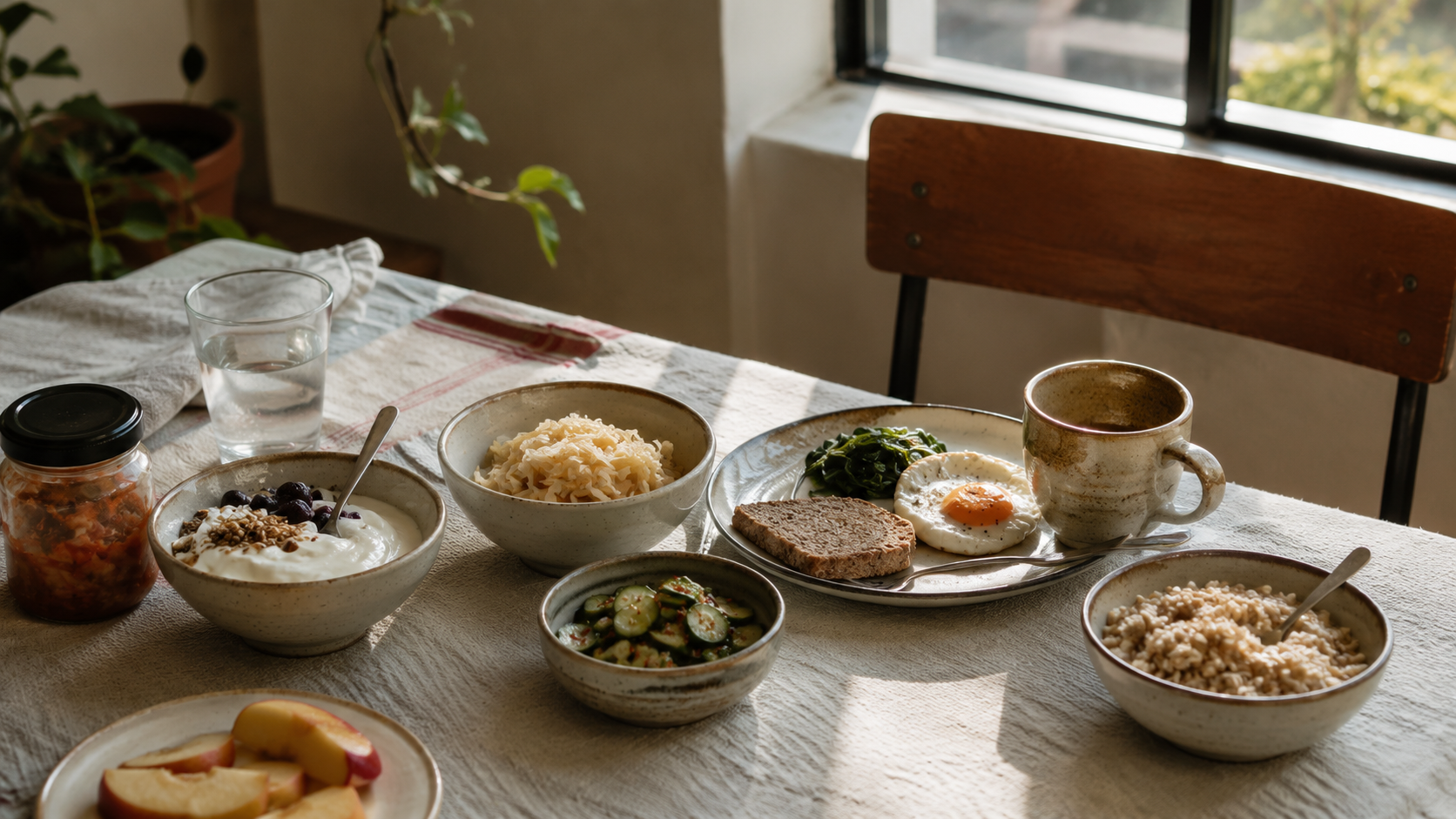
Probiotics for better sleep are worth considering too, with realistic expectations. There have been several clinical trials indicating some benefit to sleep quality and reduced stress when certain strains of probiotics were administered: specifically the Lactobacillus and Bifidobacterium species. Probiotics should be considered a supplement rather than a substitute for eating well.
Timing your meals so they do not conflict with your natural circadian rhythms can also promote synchronization of the gut’s internal rhythm and your sleep-wake cycle. Consuming your final meal 2-3 hours prior to bedtime, along with maintaining a consistent meal schedule throughout each week, helps establish a regular pattern of activity within your gut.
Consistency of sleep time is much more important than simply sleeping long enough each night. Establishing a routine of going to bed and waking up at approximately the same time each day – including weekends – minimizes social jetlag and provides your gut flora with a predictable environment to function optimally.
If you’re wondering how to fix gut health for sleep specifically, the sequence matters: stabilize your rhythm first, then add dietary variety, then layer in targeted probiotic support
To get more out of general suggestions about how to “fix” your gut and your sleep, you have to think about how each person’s gut is unique. Your gut microbiome is just as unique as your fingerprint; it was formed based upon your diet, your geographic location, your genes, and your health history. The same type of fermented food that will improve one person’s sleep may not make much of a difference at all to another person, due to differences in their specific bacteria present in their guts.
A gut microbiome test for sleep issues adds real specificity here – instead of guessing which foods or probiotic strains might help, a detailed report shows which bacterial populations are underrepresented in your gut. A detailed gut microbiome test report can provide information on what types of bacterial populations are either lacking or underpopulated within your gut. Additionally, it can tell you if you have low levels of bacterial diversity (which means there are too few different types of bacteria in your gut), as well as if there are specific areas where your bacterial imbalance(s) are impacting sleep-related pathways (such as through decreased production of serotonin or through decreased output of short-chain fatty acids).
It’s also worth noting that not all testing methods are created equal. This makes even more sense when considering that the diets, patterns of gut bacterial populations, and typical metabolic health marker results of Indians have been shown to differ significantly from those found in Western populations. Therefore, having access to a gut microbiome test that has data related to Indian diets and health patterns could give individuals who live in India a better starting point in terms of developing recommendations than relying solely on Western-based research.
Longeny’s approach is one example of this more personalized model, using population data and pairing gut microbiome insights with practical, food-first recommendations for sleep.
Regardless of the path you choose to explore about your gut health, the bottom line remains the same: Your sleep, your gut health and your gut health bacteria are always intertwined. Improving one side of this loop typically has a positive effect on both sides.
Does poor sleep really affect gut bacteria?
Yes. Studies show that losing sleep will cause less diversity in the microorganisms in your gut. This has been shown to cause a ratio of the types of bacteria to increase for those associated with inflammation and metabolic processes.
Can improving gut health help me sleep better?
Yes. Maintaining a balance of the good bacteria in my gut helps produce serotonin and melatonin, which I know regulate my ability to sleep.
What is the connection between the gut and sleep called?
The relationship between how well you sleep and the health of your gut is referred to as the “gut-brain axis”, or the bi-directional communication system between the two systems (nervous, hormonal, and immune).
What foods support both gut health and sleep?
Plants high in fiber, fermented foods, tryptophan food sources, magnesium rich foods will provide nutrients for the same pathways of both gut health and sleep.
What did the 2026 Nature Communications study find about sleep and the microbiome?
By analyzing data from nearly 7,000 people, the researchers found that there was a correlation between lower diversity of gut bacteria and lower quality sleep. There was also an association with larger amounts of social jet lag.
Is the sleep-gut relationship considered causal?
No. While studies have shown there is a strong bi-directional association, further longitudinal research is required to prove the relationship between these two systems is causal.